
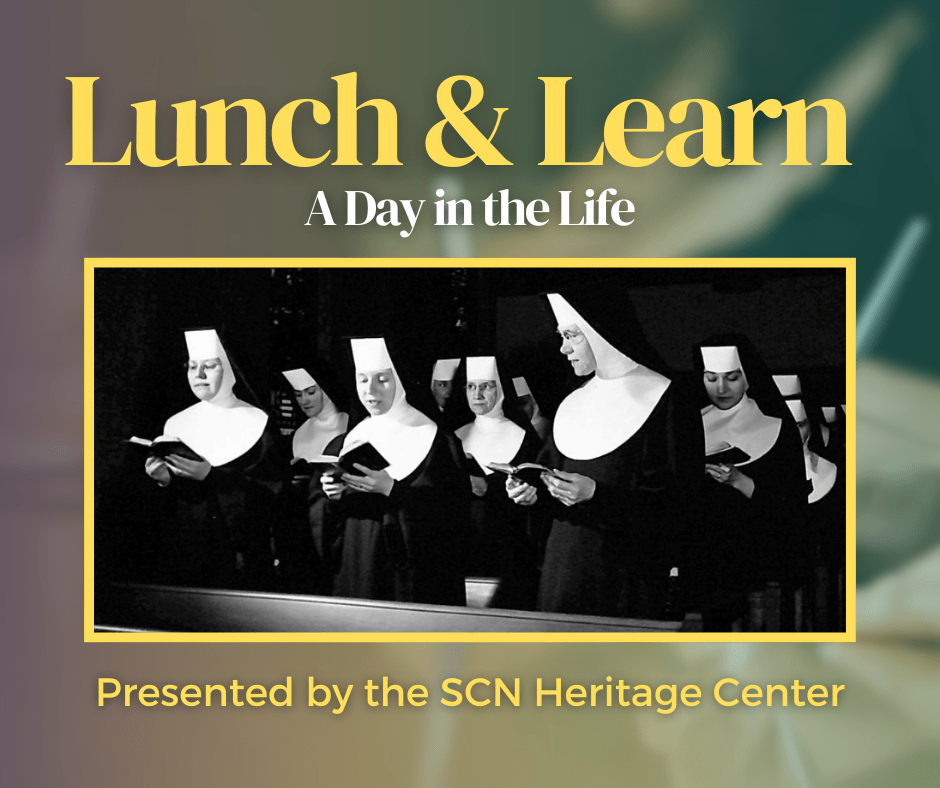

Life in a religious community is shaped by discipline, devotion, and daily tasks. Rooted in prayer and service, the day followed a structured schedule that reflected the commitment of the Sisters to their vocation. Drawing from historical sources, Heritage Center Director Kelly McDaniels and Archivist Veronica Priest explored a day in the life of the Sisters of Charity of Nazareth (SCNs) and the Vincentian Sisters of Charity (VSCs) in the early 1940s. This was the topic of the most recent Lunch & Learn series presented by the SCN Heritage Center.
Rising and Morning Prayers
The Sisters began their day early—before dawn. From December through March, SCNs rose at 5:00 AM, while the rest of the year required a 4:30 AM wake-up. The VSCs, following an even stricter discipline, rose at 4:00 AM. Their first act was a prayer, Benedicamus Domino, as they made the Sign of the Cross and dressed in their habits, embracing their calling with reverence.
Dressing was a ritual of its own. The habit symbolized their consecration, a sentiment echoed by Sister Frances Krumpelman, who recalled the joy of seeing her reflection in the grass, knowing she belonged to a community she admired.
By 5:30 AM, morning prayers and meditation commenced. In silence, they reflected on spiritual readings, preparing for the day’s work.
Mass and Breakfast
Mass was central to their daily routine. Held at 6:00 or 6:30 AM, it was attended with reverence. The Sisters believed they were not mere spectators but participants in the sacred liturgy. After Mass, breakfast followed, eaten in silence while passages from The Following of Christ were read.
Teaching and Domestic Work
For many, the morning meant teaching. Sisters served in schools at Nazareth, Presentation Academy, and other missions. Their influence shaped generations of students, instilling knowledge and faith.
Beyond the classroom, the Sisters maintained daily responsibilities—laundry, farm work, and household chores. The laundry process was meticulous, involving washing, starching, and pressing, with each Sister’s garments marked by a personal number. Many could recall their laundry number even decades later.

Farm work was essential to sustain the community. Crops, orchards, livestock, and beehives provided food for the convent. Sisters like Mary Stephen Durbin and Mary Joseph Ryan documented the agricultural efforts, detailing the methods used to track egg production or the system for milking cows.
Midday Examen and Meals
At noon, the Sisters paused for the Angelus and Examen—a moment of self-reflection on their spiritual progress. They then gathered for dinner, where they dined in silence while scripture or martyrology passages were read. Meals were not just about nourishment but a time of discipline and contemplation.
Afternoon Labor and Spiritual Reflection
After their midday break, the Sisters resumed work. Whether teaching, farming, or handling domestic duties, they continued their tasks in silence, reflecting on Christ’s Passion. At 3:00 PM, they paused for an Act of Adoration, offering prayers for the dying and the souls in Purgatory.
Evening Prayers and Recreation
As evening approached, the Sisters gathered for spiritual reading, followed by the Rosary. Supper, like all meals, was eaten with great modesty. Afterward, recreation provided a rare moment of relaxation. Sisters played table tennis, picked blackberries, or enjoyed walks around the grounds.
At 8:30 PM, night prayers were said, and the next morning’s meditation points were prepared. The Sisters then retired to their rooms, ending the day in silence, mindful of their spiritual journey.

The Chapter of Faults: A Lesson in Humility
On First Fridays, the Sisters participated in the Chapter of Faults, a tradition where they confessed minor transgressions against the rule. Some moments brought unexpected laughter—like the novice who admitted to “spilling the beans,” literally dropping a pot of beans during meal service. Another Sister inadvertently combined two unrelated confessions, saying, “I humbly accuse myself of crossing my legs and running down the hall,” much to the amusement of the room.
A Life of Devotion and Discipline
The structured life of the Sisters in the 1940s exemplified their commitment to prayer, service, and community. Every moment, from rising before dawn to evening prayers, was an offering to God. Their routine may have been demanding, but it reflected their faith and dedication to their vocation.
While times and traditions have evolved, the spirit of their mission endures in the work they continue today.



It is so good to know the padt practi es whi h kept us going. I wish some of this we continued especially prayer, devotion and discipline.